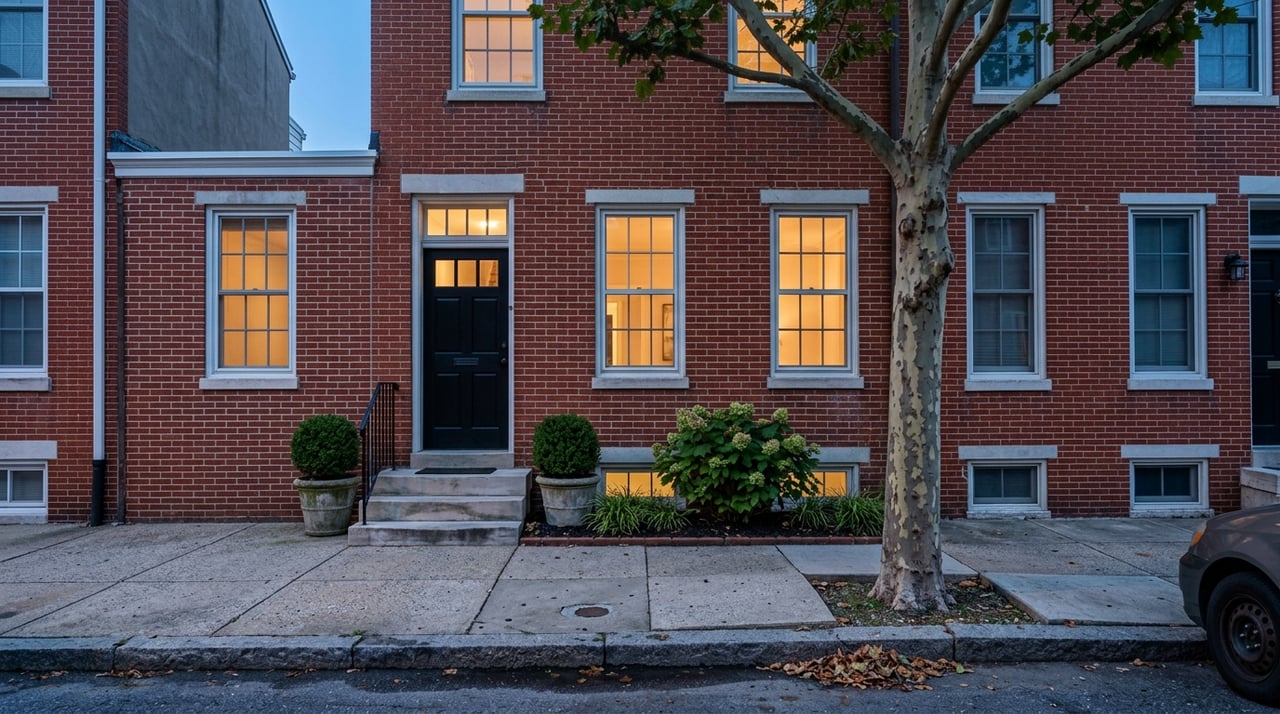
Wondering whether you should live in West Chester Borough or choose one of the nearby suburbs? It is a common question, especially if you want the right mix of convenience, space, parking, and lifestyle. The good news is that each option offers something different, and once you understand the trade-offs, your decision becomes much clearer. Let’s break it down.
West Chester living starts with lifestyle
If you picture yourself walking to coffee, dinner, shops, and local events, West Chester Borough will likely stand out right away. Visit Philadelphia describes West Chester as a walkable, historic town center with brick-lined sidewalks, 19th-century rowhomes, boutiques, nightlife, and a busy downtown feel. West Chester University also notes that downtown is about a ten-minute walk from North Campus and includes more than 65 restaurants and cafes.
If that sounds like your ideal setup, the borough delivers a more connected, in-town experience. You may not need to drive for every outing, which can make daily life feel simpler and more social. For many buyers and renters, that walkable energy is the biggest reason to choose the borough.
Nearby suburbs offer a different rhythm
The townships surrounding West Chester create a very different day-to-day feel. East Goshen Township describes itself as a predominantly suburban, mostly residential community where parts of the historic rural landscape are still visible. That tells you a lot about the atmosphere you can expect outside the borough.
If you prefer a quieter residential setting, the nearby suburbs may be a better fit. You are more likely to find lower-density neighborhoods, more separation between homes, and a more car-centered routine. That does not make one option better than the other, but it does make the choice very personal.
Borough vs suburbs by housing type
Housing style is one of the clearest differences between living in town and living nearby. In West Chester Borough, planning materials describe twins as the most common housing type, followed by detached homes and rowhouses, with apartments concentrated in certain parts of town. That gives the borough a more varied and compact housing mix.
The surrounding townships lean much more heavily toward detached homes. West Goshen planning materials say the community remained mostly single-family detached, with about 70.9% detached dwellings by 2000. For buyers who want a more traditional suburban home feel, that can be an important factor.
What the numbers say
The Census data helps show how different these areas are:
| Area | Owner-Occupied Rate | Median Owner Value | Median Rent | People Per Square Mile |
|---|---|---|---|---|
| West Chester Borough | 35.4% | $490,700 | $1,731 | 10,114.3 |
| West Goshen Township | 72.2% | $575,300 | $1,908 | 1,943.5 |
| East Goshen Township | 71.6% | $528,600 | $1,785 | 1,831.7 |
| Westtown Township | 83.1% | $616,200 | $2,389 | 1,287.4 |
| East Bradford Township | 88.2% | $603,700 | $2,392 | 691.8 |
A few patterns stand out. West Chester Borough is far denser and has a much lower owner-occupied rate than the surrounding townships. The nearby suburbs are more owner-occupied and less dense, which often aligns with larger homes, more outdoor space, and a different neighborhood layout.
More space does not always mean lower cost
Many buyers assume that living outside town will automatically cost less. In this area, that is not always true. Westtown and East Bradford both show higher median rents than West Chester Borough, which suggests that larger or newer suburban housing can come at a premium.
That matters if you are comparing options based on monthly payment alone. A suburban setting may give you more space, but it may not reduce your housing cost. Looking at both lifestyle and budget together usually leads to a better decision.
Parking can shape your daily experience
Parking is one of those details that can feel minor until you live with it every day. In West Chester Borough, the parking department manages two garages, several surface lots, meters, and residential permit parking areas with guest passes. That system supports downtown living, but it also reflects the realities of a denser environment.
If you love the borough lifestyle, parking may simply become part of the routine. You might use a garage, a permit, or plan around meter rules depending on where you live. In the nearby suburbs, the lower density often points to an easier parking experience, although that can vary by property.
Walkability versus driving
This may be the simplest way to frame the decision. In the borough, many daily activities can happen on foot. In the surrounding townships, you are more likely to drive for errands, dining, and entertainment.
That difference affects more than convenience. It changes how your weekends feel, how often you use your car, and what kind of home base feels most comfortable. If you want quick access to restaurants and events, the borough has a strong edge. If you would rather trade walkability for a quieter setting, the suburbs may feel like a better match.
Transit and commuting around West Chester
Transit access is another point where West Chester Borough stands out. SEPTA says Routes 92 and 104 serve the West Chester Transportation Center, Route 104 connects West Chester University to the 69th Street Transportation Center, and Route 135 links West Chester with Coatesville by way of Exton Square Mall. Chester County residents may also have access to Chesco Connect door-to-door shared-ride service.
Commute times across the area are not dramatically different. Census data shows mean travel times of 20.9 minutes in West Chester Borough, 24.7 in West Goshen, 25.5 in East Goshen, 26.0 in Westtown, and 25.2 in East Bradford. In practical terms, the bigger question is not just how long you commute, but whether you want a car-light, bus-optional lifestyle or a more car-dependent one.
Which nearby suburb fits best?
Not every suburb around West Chester feels the same. Even though they share a more residential pattern than the borough, the numbers show some meaningful differences.
West Goshen Township
West Goshen offers a suburban setting with a strong owner-occupied base at 72.2%. Its median owner value is $575,300, and its density is much lower than the borough at 1,943.5 people per square mile. If you want a suburban environment close to West Chester without the intensity of downtown density, West Goshen may be worth a closer look.
East Goshen Township
East Goshen combines a residential suburban identity with a similar owner-occupied rate of 71.6%. Its median owner value is $528,600, with a median rent of $1,785. Buyers who want a mostly residential setting may find East Goshen appealing, especially if they like the idea of being near West Chester without living in the borough itself.
Westtown Township
Westtown has a high owner-occupied rate of 83.1% and a median owner value of $616,200. Its median rent, $2,389, is also notably higher than the borough. If your goal is space and a lower-density setting, Westtown may fit, but it is important to compare value carefully because suburban pricing here can still be substantial.
East Bradford Township
East Bradford is the least dense of the group at 691.8 people per square mile and has the highest owner-occupied rate listed at 88.2%. Its median owner value is $603,700, and median rent is $2,392. If lower density is a top priority, East Bradford may stand out, though it may also come with a higher price point depending on the home.
Questions to ask before choosing
Before you decide between West Chester Borough and the nearby suburbs, ask yourself a few simple questions:
- Do you want to walk to restaurants, coffee shops, and events?
- Would you rather have a quieter residential setting?
- Are you comfortable with rowhomes, twins, and older mixed housing stock?
- Do you want a more detached-house feel?
- How important is easy parking to your daily routine?
- Would transit access be useful, or will you drive almost everywhere?
Your answers can reveal the right fit faster than scrolling through listings alone. The best choice is usually the one that matches how you actually want to live day to day.
How to make the right move
If you are still deciding, try touring both types of areas with your real routine in mind. Think about where you would park, how often you would drive, what kind of home layout you want, and how much access to downtown matters. A home can look great online but feel very different once you picture your real life there.
At Diego Reyes & Associates, we believe better decisions start with clear information and honest guidance. If you want help comparing West Chester Borough with nearby townships and finding the right fit for your goals, connect with Diego Reyes & Associates.
FAQs
Is West Chester Borough more walkable than nearby suburbs?
- Yes. West Chester Borough is the area’s more walkable, downtown-centered option, with restaurants, cafes, shops, and events concentrated in the borough.
Is parking harder in West Chester Borough?
- It can be. The borough uses garages, lots, meters, and residential permit parking, which reflects a denser setting and more parking demand.
Do nearby West Chester suburbs usually have more detached homes?
- Yes. The surrounding townships, especially West Goshen, have a more suburban housing pattern with a stronger presence of detached homes.
Are homes outside West Chester Borough always less expensive?
- No. Census data shows that some nearby suburban areas, including Westtown and East Bradford, have higher median rents than the borough.
Does West Chester have public transit options?
- Yes. SEPTA routes 92, 104, and 135 serve West Chester, and Chester County also offers Chesco Connect shared-ride service for residents.
What is the biggest difference between living in West Chester Borough and nearby suburbs?
- The biggest difference is usually lifestyle. The borough offers a denser, walkable, downtown experience, while the nearby suburbs offer a more residential, lower-density setting.